
Let me start with a slightly uncomfortable question, and I promise I’m asking this as much for myself as anyone else watching. Have you ever been told you’re really good at performing, maybe even very good, and yet somehow you’re still struggling to make it feel like an actual career?
You’re doing gigs, you’re putting yourself out there, you’re working hard, but the money side feels messy, inconsistent, or just vaguely confusing. If that sounds familiar, then this book is going to feel uncomfortably relevant. Even in other forms of business, this book helps massively, not just for magicians.
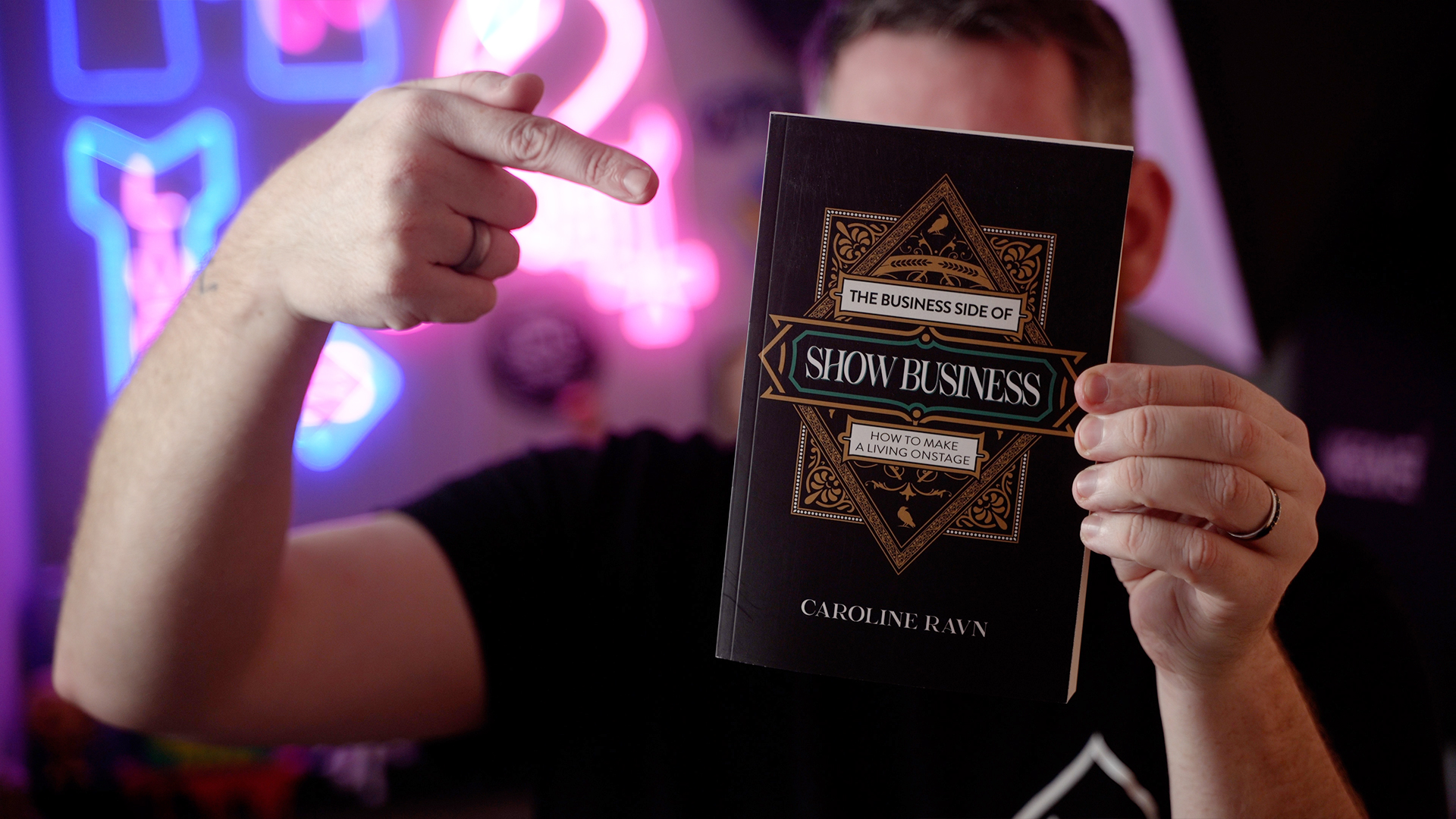
Today I want to talk about The Business Side of Show Business by Caroline Ravn, which is one of those books that doesn’t care how good your sleight of hand is or how strong your act feels. Instead, it sits you down and asks a much more awkward question: how exactly are you planning to turn what you do into something sustainable? And yes, that question alone already makes a lot of performers want to quietly look away.
At a high level, this book is built around a very simple but very often ignored idea: show business is still a business. And that sounds obvious until you realise how many performers treat the business side like an annoying afterthought.
I got a chance to see Caroline perform at The Blackpool Magic Convention too this year and the show was fantastic and well worth a watch. I didn’t get a chance to see her lecture which I’d have loved to see how it fell in-line with things in the book, but maybe next time! The wife also got up on stage with Caroline for a routine as a spectator and at the end we all got a photo together (And we asked Caroline for one of her sponge balls from the final trick and she said Rara could have one… Aslong as it was one of the small ones).
Anyway, we all love buying magic, we all love practising and we all love performing. We love the reactions that we get, but emails, pricing, contracts, marketing, branding and planning all feel like admin, and admin feels like the enemy of creativity.
This book doesn’t let you hide behind that excuse. It makes the case that avoiding the business side doesn’t make you more artistic, it just makes everything harder and more stressful than it needs to be.
One of the strongest ideas running throughout the book is that nobody is coming to rescue you. Clients don’t magically understand what you offer. Audiences don’t automatically know your value. And opportunities don’t appear just because you’re talented. If you can’t clearly explain what you do, who it’s for, and why it’s worth paying for, then clients won’t do that work for you. The book keeps coming back to this idea that clarity is not optional. If people are confused about what you offer, they won’t book you — or they’ll book you cheaply.
There’s a big emphasis on positioning, and not in a flashy marketing sense, but in a very practical, grounded way. The book makes it clear that clients don’t hire performers for techniques, methods, or theory. They hire solutions. You’re there to make an event better, to entertain guests, to reduce awkwardness, to create moments people remember. When you understand that, it becomes much easier to talk about your work without feeling awkward or salesy. You stop selling tricks, and you start explaining outcomes.
Another major theme is professionalism, which again sounds obvious until you realise how many performers quietly struggle with it. Responding clearly to emails, being consistent with pricing, knowing exactly what you offer, showing up prepared, and setting boundaries all matter far more than most people want to admit. The book makes the point that clients don’t hire mystery. They hire confidence and clarity. And confidence, in this case, often comes from being organised rather than charismatic.
Marketing is another area where the book offers a really useful reframing. Instead of treating marketing as self-promotion, it treats it as uncertainty reduction. Clients want to know what will happen if they hire you. They want to know you’ll be reliable, easy to work with, and that you’ll make them look good. When you understand that, marketing stops being about shouting how amazing you are and starts being about making decisions easier for the person on the other side.
The book also leans heavily into long-term thinking, which is something a lot of performers avoid because it forces you to be honest with yourself. It talks about pricing properly, understanding your costs, saying no to bad gigs, and not confusing being busy with being successful. One of the more uncomfortable truths in the book is that constantly undercharging doesn’t make you noble or humble — it just makes it harder to sustain what you’re doing. That idea alone is probably worth the price of the book for a lot of people.
To be clear though, this isn’t a hype book. There are no shortcuts, no overnight success stories, and no promises of easy money. What it offers instead is fundamentals. There’s consistency, clarity, communication, and treating what you do like a real business even when it still feels small. It’s not glamorous advice, but it’s the kind that quietly saves you from a lot of future stress.
So who is this book actually for? If you perform purely as a hobby and don’t care about money or consistency, this might feel a bit heavy. But if you perform regularly, want better gigs, feel awkward talking about pricing, or suspect you’re undercharging and hoping nobody notices, then this book is very much aimed at you. Especially if you’ve ever thought, “I love performing, I just hate everything around it.”
Final thoughts on The Business Side of Show Business is that it won’t make you a better performer on stage. It won’t improve your technique or your material. But it might make you a much better performer off stage, in emails, conversations, negotiations, and planning. And if you want performing to be more than just a passion project, that side of things matters more than most of us like to admit.
Thanks for watching. If you’ve read this book, I’d genuinely love to hear what you thought. And if the business side of performing has always felt confusing, awkward, or overwhelming, this might be a very solid place to start.
And you you’ve stuck around this long, a very solid place to go to would be the video on screen to continue watching content from the channel, but until next time, see ya!